DESIGNING A LIVING CREATURE ECOSYSTEM FOR ROCO KINGDOM
- Foley
- Game Audio
DESIGNING A LIVING CREATURE ECOSYSTEM FOR ROCO KINGDOM
date19 JUL, 2026
- Foley
- Game Audio
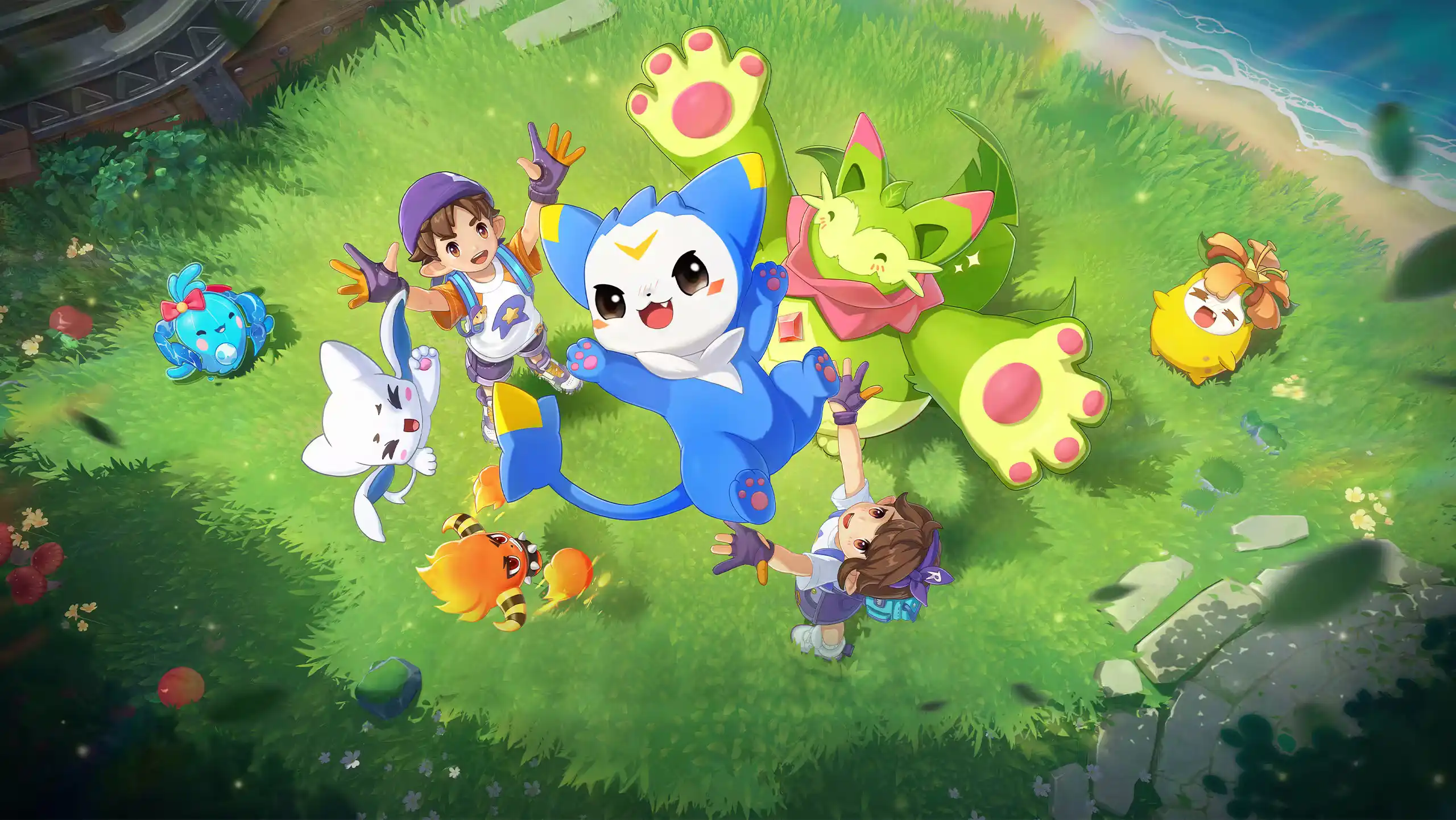
Designing one memorable creature voice is already a creative challenge. Roco Kingdom: World required a system for more than 500 collectible creatures, known as Jinglings.
Each Jingling needed its own personality, emotional range, physical presence, actions, combat sounds, and evolutionary identity. Together, the work represented more than 50,000 bespoke sounds, created without relying on template-driven identities or generic movement libraries.
The challenge was not only scale. It was preserving individuality while building a coherent sonic language that could continue expanding with the game.
<iframe width="560" height="315" src="https://www.youtube.com/embed/47H-JTQ_Jho?si=pWv85lHKwgUO5p2e" title="YouTube video player" frameborder="0" allow="accelerometer; autoplay; clipboard-write; encrypted-media; gyroscope; picture-in-picture; web-share" referrerpolicy="strict-origin-when-cross-origin" allowfullscreen></iframe>
A two-minute introduction to the design challenge and selected results.
THE CHALLENGE
Every Jingling needed to feel distinctive on its own while still belonging to a wider family, ecosystem, and world.
Related creatures had to remain recognizable without sounding interchangeable. Evolutionary forms needed to become older, larger, more powerful, or more unusual while preserving the identity of the original creature. New regions and future content also required a repeatable design logic that could expand without collapsing into repetition.
The result needed to feel like a living creature ecosystem rather than a collection of disconnected sound assets.
IDENTITY BEFORE SCALE
MoreFun Studio and POSTRED began by studying each Jingling’s artwork, animation, biological references, elemental qualities, and personality.
Before committing to full production, the teams created small identity-defining demos built around a few emotional states. These early prototypes allowed the creative leads to evaluate personality, vocal palette, and emotional readability before investing in the complete set of voices, actions, combat sounds, and variations.
This established a central production principle:
Lock in the creature’s sonic identity before scaling.
The same principle guided differentiation. Related creatures shared enough biological or stylistic language to feel connected, while articulation, pitch, rhythm, texture, and emotional energy gave each one its own identity. Across evolutionary forms, recognizable traits were preserved while the voice developed in scale, age, confidence, or power.
[MEDIA EXAMPLE: CREATURE IDENTITY OR EVOLUTION]
ORIGINAL PERFORMANCE AND SOUND DESIGN
Original performance remained central to the project.
The teams combined experimental vocal performance, animal recordings, Foley, musical instruments, custom-built sources, synthesis, and sound-design processing.
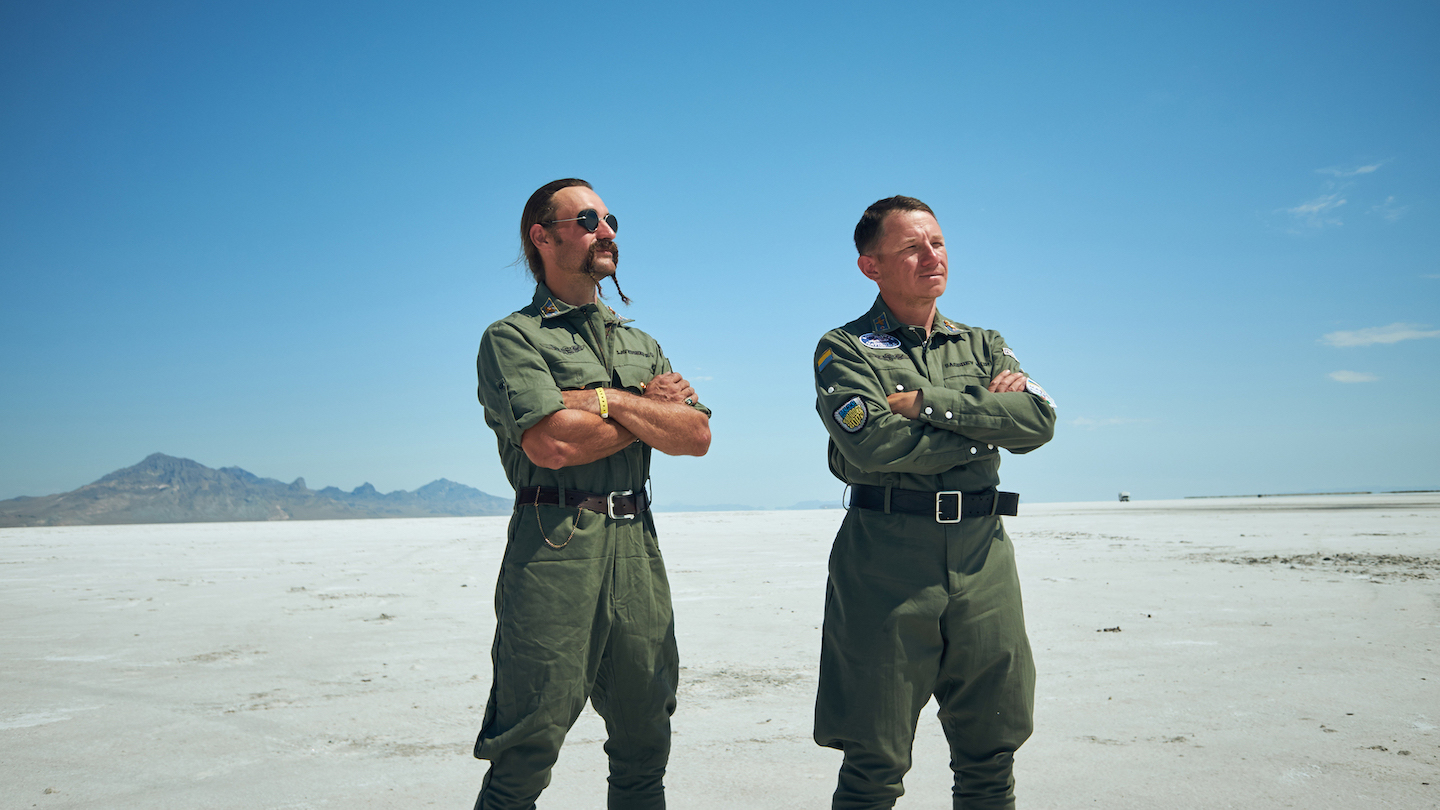
POSTRED’s Foley stages were used to record custom movement, impacts, traversal, body detail, and character actions. Vocal performers provided emotional precision that animals could not be expected to perform on command, while animal recordings gave the voices biological credibility. Musical and synthetic elements helped define Jinglings whose magical anatomy had no direct real-world equivalent.
The objective was not to create the densest possible sound. It was to build a focused palette that felt expressive, believable, and connected to the animation.
The same principle guided differentiation. Related creatures shared enough biological or stylistic language to feel connected, while articulation, pitch, rhythm, texture, and emotional energy gave each one its own identity.
Across evolutionary forms, recognizable traits were preserved while the voice developed in scale, maturity, confidence, or power.
[MEDIA EXAMPLE: CREATURE IDENTITY OR EVOLUTION]
ORIGINAL PERFORMANCE AT THE CORE
Original performance remained central to the project.
The teams combined experimental vocal performance, animal recordings, Foley, musical instruments, custom-built sources, synthesis, and sound-design processing.
POSTRED’s Foley stages were used to record custom movement, impacts, traversal, body details, and character actions. Vocal performers provided emotional precision that animals could not be expected to perform on command, while animal recordings gave the voices biological credibility.
Musical and synthetic elements helped define Jinglings whose magical anatomy had no direct real-world equivalent.
The objective was not to create the densest possible sound. It was to build a focused palette that felt expressive, believable, and connected to the character’s animation.
[MEDIA EXAMPLE: ORIGINAL PERFORMANCE OR FOLEY]
A COMPREHENSIVE SOUNDSCAPE
Voices and actions formed the foundation, but the wider design extended into riding, singing, ecological behavior, and music.
Riding sounds reflected each Jingling’s size, speed, gait, body structure, and manner of movement. These sounds required dedicated treatment because they are heard continuously during traversal and directly affect how the mount feels to the player.
Singing extended creature voices into musical behavior. Selected Jinglings could perform alone or together, while ecological systems allowed creatures to react, communicate, and behave beyond direct player interaction.
The MoreFun Studio audio team carried these identities into broader gameplay systems, including personality-related voice triggers, pitch variation, behavior states, ecological interactions, and Jingling-based music.
Together, these layers created a comprehensive soundscape around each creature.
[MEDIA EXAMPLE: RIDING, SINGING, OR ECOLOGY]
COLLABORATION AT SCALE
MoreFun Studio and POSTRED worked as closely connected creative and production teams.
MoreFun established the wider audio vision, gameplay requirements, implementation systems, and final in-game integration. POSTRED contributed creature voice and action sound design, original recording, Foley, editing, experimentation, asset production, and scalable production support.
Shared briefs, identity-defining demos, clear feedback, and early iteration reduced the risk of large-scale rework. Once a creature’s identity was approved, the teams could move confidently into full production.
This collaborative model allowed structure and experimentation to coexist. The process remained scalable without reducing the Jinglings to templates.
THE RESULT
The collaboration produced a repeatable creature-audio pipeline supporting more than 500 Jinglings and over 50,000 bespoke sounds.
More importantly, scale did not erase character.
Jinglings communicate personality, emotion, physicality, and identity through sound. Related species remain distinct. Evolutions develop without losing their origins. Mounts differ in weight and movement. Singing and ecological behaviors make the world feel active beyond combat and direct player interaction.
The scalable foundation did more than save production time. It allowed the teams to invest that time in the details, interactions, and creative systems that make the Jinglings feel alive.
PROJECT SCOPE
Project: Roco Kingdom: World
Developer: MoreFun Studio
Collaboration: MoreFun Studio and POSTRED
Scale: More than 500 Jinglings and over 50,000 bespoke creature sounds
POSTRED contribution: Creature voice and action sound design, original performance recording, Foley, editing, creative experimentation, asset production, and scalable production support
MoreFun Studio leadership: Overall audio direction, gameplay systems, implementation, integration, immersive creature systems, and final in-game delivery
Lead Audio Designer, MoreFun Studio: Runhang Zeng
Head of Game Audio Division, POSTRED: Luka Lebanidze
WATCH THE FULL PRESENTATION
For a deeper look at the creative, production, and implementation thinking behind the project, watch the complete presentation by MoreFun Studio and POSTRED.
[EMBED OR LINK FULL PRESENTATION]